

Acne doesn’t care about your class schedule, and neither does your skin when you’re stuck choosing between two drugstore giants. If you’ve been asking yourself, I am a college student, are La Roche-Posay products better for acne-prone skin than Neutrogena?, you’re not alone in the struggle.
Between late nights, dining hall food, and stress before exams, breakouts show up at the worst times. Picking the wrong product can mean wasted money and irritated skin.
This guide breaks down exactly how these two brands compare, ingredient by ingredient, so you can choose the one that actually fits your skin and your budget.
La Roche-Posay vs Neutrogena: Quick Comparison
| Factor | La Roche-Posay | Neutrogena |
|---|---|---|
| Best suited for | Sensitive, reactive, acne-prone skin | Oily, resilient, acne-prone skin |
| Core lineup | Effaclar range | Oil-Free Acne Wash, Rapid Clear line |
| Key ingredients | Salicylic acid, benzoyl peroxide, niacinamide, thermal spring water | Salicylic acid, benzoyl peroxide (higher concentrations available) |
| Formulation approach | Acne treatment plus barrier support | Direct, stronger acne-fighting formulas |
| Skin feel | Gentler, less stripping | Can feel drying with daily use |
| Price range | Mid-to-higher | Budget-friendly |
| Availability | Pharmacies, select retailers | Widely available at most drugstores |
| Good for college budgets | Moderate | Strong |
La Roche-Posay vs Neutrogena: What’s the Main Difference?
The core difference comes down to philosophy. La Roche-Posay builds its formulas around treating acne while protecting the skin barrier, while Neutrogena leans into stronger, faster-acting formulas built for oil control and breakout reduction.
That single difference shapes almost everything else, from how each brand handles active ingredients to who ends up sticking with a routine long-term.
La Roche-Posay Focus
La Roche-Posay’s Effaclar range pairs proven acne ingredients like salicylic acid and benzoyl peroxide with soothing additions such as niacinamide and thermal spring water. The goal is treating active breakouts without triggering redness or irritation along the way.
This barrier-first approach makes it a common pick for people whose acne comes with dryness, sensitivity, or a history of reacting badly to harsher products.
Neutrogena Focus
Neutrogena focuses on direct, no-frills acne treatment. Its formulas often use higher concentrations of active ingredients, prioritizing oil control and clogged pore removal over comfort.
For skin that’s oily and tolerates strong actives well, this focus can mean quicker visible results, though it sometimes comes at the cost of dryness or peeling with daily use.
La Roche-Posay vs Neutrogena for Acne-Prone Skin
Both brands offer legitimate acne treatment options, so the better choice depends on how your skin responds to active ingredients over time. Acne-prone skin isn’t one single category, and a formula that clears one person’s breakouts can irritate someone else’s.
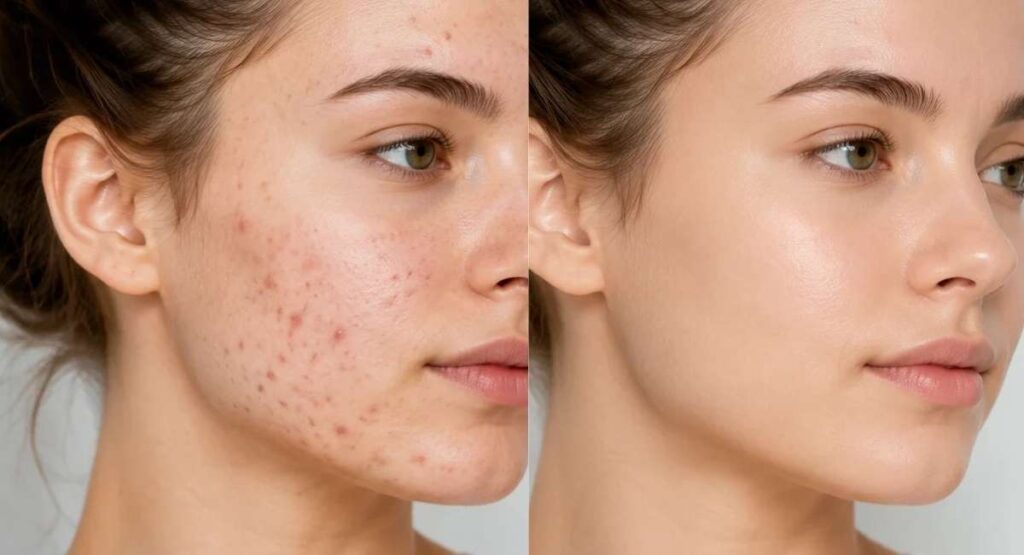
La Roche-Posay tends to suit people who need consistent, gentler acne care that won’t compromise the skin barrier. Neutrogena tends to suit people whose skin can handle stronger formulations without excessive dryness.
| Skin Concern | Better Fit |
|---|---|
| Frequent, oily breakouts | Neutrogena |
| Breakouts with redness or sensitivity | La Roche-Posay |
| Needs barrier support alongside treatment | La Roche-Posay |
| Wants fast, strong action on active breakouts | Neutrogena |
La Roche-Posay vs Neutrogena for Sensitive Acne-Prone Skin
Sensitive acne-prone skin is where La Roche-Posay generally has the clearest edge. Its formulations are built with fragrance-free, barrier-supporting ingredients that reduce the chances of irritation while still targeting breakouts.
Neutrogena’s stronger acne treatments can work on sensitive skin too, but they’re more likely to cause dryness, peeling, or redness if introduced too quickly or used daily right away.
La Roche-Posay vs Neutrogena for Oily Skin
Oily skin usually responds well to both brands, but Neutrogena often has a slight advantage here. Its formulas are designed to cut through excess oil and unclog pores more aggressively.
La Roche-Posay still performs well for oily skin, especially through its oil-free moisturizers and mattifying products, but its overall approach stays a bit more measured than Neutrogena’s.
Oily Skin Benefits
- Neutrogena’s higher-strength benzoyl peroxide options tackle stubborn, oil-driven breakouts faster
- La Roche-Posay’s Effaclar Mat controls shine without stripping the skin
- Both brands offer oil-free, non-comedogenic moisturizers that won’t clog pores
- Salicylic acid in either brand helps dissolve the oil and debris sitting inside pores
La Roche-Posay vs Neutrogena: Which Ingredients Matter Most for Acne?
Ingredient strength and formulation matter more than brand name when it comes to actual acne results. Both brands rely on similar core actives, just in different concentrations and combinations.
| Ingredient | What It Does | Where It’s Common |
|---|---|---|
| Salicylic acid | Clears clogged pores, targets blackheads | Both brands |
| Benzoyl peroxide | Kills acne-causing bacteria | Both, with Neutrogena offering higher concentrations |
| Adapalene | Prevents new clogged pores from forming | Both brands offer OTC versions |
| Niacinamide | Calms inflammation, supports the skin barrier | Mostly La Roche-Posay |
| Thermal spring water | Soothes irritation and redness | La Roche-Posay |
| Hyaluronic acid / glycerin | Adds lightweight hydration | Mostly Neutrogena |
Higher ingredient strength doesn’t always mean better results. A lower concentration that your skin can tolerate consistently often outperforms a stronger one you can only use occasionally.
La Roche-Posay vs Neutrogena: Which Gives Faster Results?
Neutrogena often shows visible results faster, mainly because its higher-strength benzoyl peroxide and salicylic acid formulas act more aggressively on active breakouts. For a single stubborn pimple, that extra strength can make a noticeable difference within days.
La Roche-Posay tends to work on a slower, steadier timeline. Its gentler approach focuses on consistent improvement without irritation, which usually means results build gradually over several weeks rather than overnight.
Speed isn’t everything here. A faster result that causes dryness or peeling can end up slowing your overall progress if it forces you to pause treatment.
La Roche-Posay vs Neutrogena: Which Is Better for Everyday Use?
For daily, long-term use, La Roche-Posay generally holds up better. Its formulas are built to be used morning and night without stripping the skin barrier over time.
Neutrogena can be used daily too, but some of its stronger treatments work best every other day or as spot treatments rather than an all-over daily step. Overusing them can lead to dryness or sensitivity building up over weeks.
| Use Case | Better Fit |
|---|---|
| Daily cleanser for sensitive skin | La Roche-Posay |
| Daily cleanser for oily, resilient skin | Neutrogena |
| All-over daily treatment | La Roche-Posay |
| Targeted spot treatment | Neutrogena |
La Roche-Posay vs Neutrogena: Which Is More Affordable for College Students?
Neutrogena is the clear winner on upfront price. It’s widely available at most drugstores and big-box stores, often at a fraction of what La Roche-Posay products cost.
La Roche-Posay products carry a higher price tag, but many students find the smaller amount needed per use and reduced need for extra soothing products balances out some of that gap over time.
If budget is the deciding factor, Neutrogena makes it easier to build a full routine, cleanser, treatment, and moisturizer, without stretching a tight semester budget.
La Roche-Posay vs Neutrogena: Which Brand Is More Student-Friendly?
Student-friendly isn’t just about price. It also means fitting into a busy, inconsistent schedule without demanding constant attention or causing setbacks.
La Roche-Posay tends to be more forgiving for students who forget a step, skip a night, or deal with stress-related flare-ups, since its formulas are less likely to cause a reaction if the routine isn’t perfectly consistent. Neutrogena works well for students who want a simple, low-cost routine and don’t mind sticking to a stricter schedule to avoid irritation.
La Roche-Posay vs Neutrogena: Pros and Cons
La Roche-Posay Pros
- Gentle on sensitive, reactive skin
- Supports the skin barrier while treating acne
- Fragrance-free formulations across most of the Effaclar range
- Lower risk of dryness or peeling with daily use
La Roche-Posay Cons
- Higher price point
- Results can take longer to show
- Less widely available in some stores
Neutrogena Pros
- More affordable and widely available
- Higher-strength options for stubborn breakouts
- Faster visible results on oily, resilient skin
- Large product range to choose from
Neutrogena Cons
- Can cause dryness or irritation with daily use
- Formulas prioritize strength over comfort
- Less suited to sensitive or reactive skin
How to Build a Simple College Skincare Routine With Either Brand
A good acne routine doesn’t need to be complicated, especially with a packed class schedule. The same basic structure works whether you choose La Roche-Posay, Neutrogena, or a mix of both.
- Cleanse morning and night with a salicylic acid based cleanser
- Apply a treatment product like benzoyl peroxide or adapalene to active breakouts
- Follow with an oil-free, non-comedogenic moisturizer, even on oily days
- Add sunscreen in the morning, since acne actives can increase sun sensitivity
- Introduce new actives one at a time, spaced a couple of weeks apart
Consistency matters more than which brand’s logo is on the bottle. Most active ingredients need four to six weeks of regular use before showing real change.
La Roche-Posay vs Neutrogena: Which Should College Students Choose?
Choose La Roche-Posay if your acne comes with sensitivity, redness, or a tendency to react badly to strong products. It’s built to keep your skin comfortable while still treating breakouts.
Choose Neutrogena if your skin is oily, tolerates stronger actives well, and you want effective results on a tight budget. It won’t baby your skin, but it delivers results many students rely on.
Some students end up mixing both, using a gentle La Roche-Posay cleanser with a stronger Neutrogena spot treatment, which can work well as long as you avoid layering multiple strong actives at once.
Final Verdict: Are La Roche-Posay Products Better for Acne-Prone Skin Than Neutrogena?
Neither brand is objectively better across the board. La Roche-Posay is generally the stronger choice for sensitive, reactive, acne-prone skin that needs barrier support alongside treatment. Neutrogena is generally the stronger choice for oily, resilient skin and tighter budgets.
The right answer depends on how your skin has responded to acne products in the past, not on which brand is more popular. Pay attention to how your skin reacts in the first two weeks, and adjust from there.
Frequently Asked Questions
Is La Roche-Posay actually better than Neutrogena for acne?
Not universally. It tends to work better for sensitive or easily irritated skin, while Neutrogena often wins on strength and price for oilier, more resilient skin.
Can I mix La Roche-Posay and Neutrogena products?
Yes, many people combine them, such as a Neutrogena cleanser with a La Roche-Posay moisturizer. Just avoid using two strong active ingredients, like two benzoyl peroxide products, at the same time.
Which brand is more affordable for a student budget?
Neutrogena is generally the more affordable option and is widely available at most drugstores.
How long does it take to see results from either brand?
Most active ingredients, including salicylic acid, benzoyl peroxide, and adapalene, take four to six weeks of consistent use before showing real results.
Is benzoyl peroxide or salicylic acid better for acne?
They target different problems. Salicylic acid works well on clogged pores, blackheads, and whiteheads, while benzoyl peroxide targets inflamed, bacteria-driven breakouts. Many routines use both.
Should I stop moisturizing if my skin feels oily?
No. Skipping moisturizer often makes oiliness worse by triggering the skin to produce more oil to compensate for lost hydration.
Can stress actually cause more breakouts?
Yes. Stress raises cortisol levels, which can increase oil production and inflammation, making breakouts more likely during high-stress periods like exams.
When should I see a dermatologist instead of using over-the-counter products?
If breakouts are painful, deep, leaving scarring, or haven’t improved after two to three months of consistent use, it’s worth seeing a dermatologist rather than continuing to cycle through drugstore products.

AtlasWorth Editorial publishes well-researched content on celebrity net worth, biographies, entrepreneurs, and business leaders. Our articles are based on publicly available information from reliable sources and are regularly reviewed for accuracy and relevance.