

Pregnancy has a way of making you question products you’ve used for years without a second thought.
That tub of Nivea Creme in your bathroom cabinet suddenly feels like a decision instead of a habit. So are Nivea products safe compared to Burt’s Bees or Mustela, or should you switch brands altogether?
The honest answer is that safety comes down to the exact formula, not the name on the label. Some Nivea products are perfectly fine, some Burt’s Bees items need a closer look, and Mustela isn’t automatically the safer choice just because it’s marketed for pregnancy.
Here’s how to tell the difference.
Nivea vs Burt’s Bees vs Mustela: Quick Comparison for Pregnancy
| Nivea | Burt’s Bees | Mustela | |
|---|---|---|---|
| Pregnancy focus | Not brand-specific; general skincare | Some maternity products (Mama Bee line) | Dedicated maternity range |
| Typical formula style | Mineral oil, glycerin, dimethicone-based | Plant oils, butters, botanical extracts | Botanical actives with dermatologist-tested claims |
| Fragrance-free options | Limited | Yes (Mama Bee Belly Butter) | Yes (fragrance-free stretch mark cream) |
| Retinoids/hydroquinone in core products | Not present in basic lines | Not present in maternity line | Not present in maternity line |
| Price point | Budget-friendly | Mid-range | Premium |
| Best suited for | Everyday hydration, tight budgets | Botanical preference, light natural formulas | Targeted belly and stretch mark care |
The Short Answer: Are Nivea Products Safe During Pregnancy?
Yes, most Nivea products are considered safe during pregnancy. Basic moisturizers, body lotions, and lip balms are formulated for everyday use and don’t contain the ingredients doctors flag as pregnancy concerns.
The exception is Nivea’s treatment-focused products, like anti-aging serums or pigmentation creams, which sometimes contain retinol. Those need a closer look at the label before you use them.
What Skincare Ingredients Should Pregnant Women Avoid?
Ingredient safety during pregnancy comes down to a short, well-documented list rather than entire brands or product categories. Dermatologists consistently flag the same handful of actives across every skincare line, including Nivea, Burt’s Bees, and Mustela.
- Retinoids (retinol, tretinoin, adapalene) — linked to birth defects at high doses, avoided topically out of caution
- Hydroquinone — a skin-lightening agent with higher-than-average skin absorption
- High-strength salicylic acid — low levels in cleansers are fine, but leave-on treatments above 2% are usually flagged
- Certain essential oils — some can irritate skin or trigger reactions in pregnancy-sensitive skin
- Formaldehyde-releasing preservatives — found in a small number of nail and hair products, worth checking
If a product doesn’t contain any of these, it’s generally considered low-risk regardless of brand.
How to Check If a Nivea, Burt’s Bees, or Mustela Product Is Pregnancy-Safe
Checking a product takes less time than most people expect. Flip the pack over and scan the ingredient list for the names above before anything else.
| Step | What to do |
|---|---|
| 1 | Find the full ingredient list on the pack, not an old photo or overseas listing |
| 2 | Scan for retinol, retinoic acid, adapalene, or hydroquinone |
| 3 | Check the concentration of salicylic acid if it’s a treatment product |
| 4 | Patch test on a small area if the skin has become more reactive lately |
| 5 | Ask a pharmacist or dermatologist if anything on the label is unfamiliar |
This five-step check works the same way whether you’re holding a tub of Nivea Creme, a Burt’s Bees balm, or a Mustela stretch mark cream.
Why Do So Many Pregnant Women Choose Mustela?
Mustela built its entire brand around pregnancy and infant skin, so its maternity line is formulated and tested with that specific use case in mind. That focus removes a lot of the guesswork for expecting mothers.
Its Stretch Marks Cream and Oil are designed for elasticity support rather than general moisturizing, and a fragrance-free version exists for sensitive skin. That specialization is convenient, but it doesn’t automatically make Mustela safer than a compatible product from another brand.
Where Does Burt’s Bees Fit In?
Burt’s Bees sits between the two, offering naturally derived ingredients with a handful of maternity-specific products like the Mama Bee Belly Butter. It appeals to people who prefer plant-based formulas over mineral oil or silicone-based creams.
Natural origin doesn’t equal automatic safety though. Botanical extracts and essential oils can still irritate pregnancy skin, so the same ingredient check applies here as it does anywhere else.
Nivea vs Burt’s Bees vs Mustela for Dry Pregnancy Skin
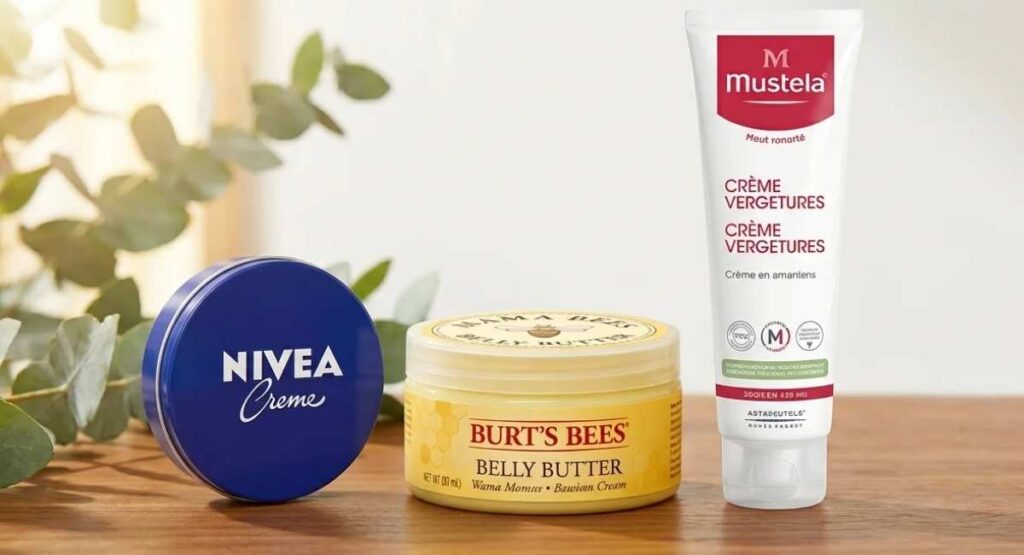
Dry skin during pregnancy is common, and all three brands can help with it in different ways.
- Nivea works well for affordable, everyday hydration on hands, elbows, and feet
- Burt’s Bees suits people who want a lighter, botanical-based moisturizer
- Mustela is built for larger areas like the belly and thighs where skin is stretching fastest
The right pick depends more on texture preference and skin tolerance than on which brand claims to be “best.”
What About Stretch Marks?
No cream, regardless of brand, can guarantee stretch mark prevention. A well-known review of controlled trials found no strong evidence that topical products, including those with cocoa butter, vitamin E, or hyaluronic acid, stop stretch marks from forming.
That said, belly butters and stretch mark creams still have value. They keep skin moisturized and more comfortable as it stretches, even if they can’t promise a stretch-mark-free result.
Which Brand Is Best for Sensitive Skin During Pregnancy?
Sensitive or reactive skin during pregnancy usually responds best to fragrance-free formulas rather than a specific brand.
| Skin concern | Better starting point |
|---|---|
| General sensitivity | Fragrance-free options from any of the three brands |
| Eczema-prone skin | Simple, short ingredient lists without alcohol or added fragrance |
| Fragrance allergy | Mustela’s fragrance-free stretch mark cream or Burt’s Bees Mama Bee Belly Butter |
| Mild dryness, no reactivity | Standard Nivea moisturizers work fine |
If your skin has become more reactive since becoming pregnant, fragrance-free almost always beats “natural” as a selection rule.
Nivea vs Burt’s Bees vs Mustela: Which Offers the Best Value?
Price differences between these three brands are significant, and they roughly track how specialized each product is.
| Brand | Typical price range | What you’re paying for |
|---|---|---|
| Nivea | Budget | Basic, effective hydration at low cost |
| Burt’s Bees | Mid-range | Naturally derived ingredients, some maternity-specific items |
| Mustela | Premium | Dedicated maternity formulation and testing |
Paying more doesn’t buy extra fetal safety here. It buys convenience, since Mustela has already filtered out ingredients you’d otherwise need to check yourself.
When Should You Choose Nivea?
Nivea makes sense if you want reliable, affordable moisturizing without needing a maternity-specific label. It’s a solid pick for everyday hydration on hands, elbows, and dry patches.
Stick to the basic moisturizing range and steer clear of treatment products like anti-aging or pigmentation creams unless you’ve confirmed the ingredient list first.
When Should You Choose Burt’s Bees?
Burt’s Bees fits well if you prefer plant-based, naturally derived formulas over mineral oil or silicone-heavy creams. The Mama Bee Belly Butter is a reasonable choice for belly and hip moisturizing.
It’s also a good middle ground for people who want maternity-marketed products without paying Mustela’s premium pricing.
When Should You Choose Mustela?
Mustela is the strongest choice if you want a product designed specifically for a pregnant body, without having to research every ingredient yourself. Its stretch mark range targets skin that’s stretching across the belly, hips, and thighs.
It’s worth the extra cost mainly for convenience and peace of mind, not because it outperforms a compatible product from another brand on safety.
Final Verdict: Are Nivea Products Safe Compared to Burt’s Bees or Mustela?
Nivea products are safe for most pregnant women, especially the basic moisturizing range that skips retinoids and hydroquinone. Burt’s Bees and Mustela aren’t inherently safer; they’re simply formulated with different priorities in mind.
The real decision isn’t about picking the “safest brand.” It’s about checking the exact product’s ingredient list, matching it to your skin’s current sensitivity, and choosing based on texture, budget, and whether you value maternity-specific formulation. All three brands can work well when you apply that standard consistently.
Frequently Asked Questions
Is Nivea Creme safe to use during pregnancy?
Yes, Nivea Creme is generally considered safe. It doesn’t contain retinoids or hydroquinone, though its fragrance and lanolin content may not suit very sensitive skin.
Can I use Burt’s Bees Belly Butter every day during pregnancy?
Yes, it’s designed for daily use and is fragrance-free, making it a reasonable choice for regular belly and hip moisturizing.
Is Mustela better than Nivea for pregnancy skincare?
Not necessarily better, just more specialized. Mustela is formulated specifically for maternity skin, while Nivea offers general moisturizing that works well for many pregnant women too.
Do natural ingredients in Burt’s Bees make it safer than Nivea?
No. Natural origin doesn’t guarantee pregnancy safety. Some botanical ingredients and essential oils can still irritate skin, so checking the full ingredient list still matters.
Can any of these three brands prevent stretch marks?
No product can guarantee stretch mark prevention. These creams moisturize the skin and improve comfort, but current evidence doesn’t support a prevention claim for any brand.
What ingredients should I avoid across Nivea, Burt’s Bees, and Mustela products?
Avoid retinoids, hydroquinone, and high-strength salicylic acid regardless of brand. These are the ingredients most consistently flagged during pregnancy.

AtlasWorth Editorial publishes well-researched content on celebrity net worth, biographies, entrepreneurs, and business leaders. Our articles are based on publicly available information from reliable sources and are regularly reviewed for accuracy and relevance.