

Search Karen Lynch and Elizabeth Taylor and you’ll likely land on a mix of confusing results, some about a healthcare executive, others about a Hollywood legend, with little explanation for why the two names appear together at all.
The truth is simpler than the search results suggest. Karen Lynch built her career in corporate healthcare, eventually leading CVS Health as President and CEO. Elizabeth Taylor built hers in film, becoming one of classic Hollywood’s most decorated actresses and later a pioneering AIDS activist. There’s no documented relationship between them, personal or professional.
What makes their stories worth exploring side by side isn’t a shared history, but a shared pattern: two women, decades apart, who reached the top of industries where few women held power, and who each used that position for something beyond personal achievement.
This article breaks down who they are individually, how their careers unfolded, and what their parallel paths reveal about leadership, resilience, and legacy.
Early Life and Background of Executive Leader Karen Lynch
Karen Lynch grew up in Ware, Massachusetts, in a working-class household shaped by early hardship. Her father died when she was young, leaving her mother to raise five children largely on her own.

That upbringing pushed her toward independence early. She held jobs through her teenage years and carried that same work ethic into college, where financial necessity and ambition moved together.
Lynch pursued her education with a clear eye on business and finance:
- Bachelor’s degree from Boston College
- MBA from Boston University’s Questrom School of Business
- Early career roles that built her foundation in corporate finance and operations
This grounding in practical, self-made success later defined her reputation as a healthcare executive who understood both the numbers and the people behind them.
Early Childhood and Stardom of Hollywood Icon Elizabeth Taylor
Elizabeth Taylor was born on February 27, 1932, in London, to American parents: an art dealer father and a former stage actress mother. Her early years unfolded far from Hollywood, in an upper-middle-class British household.
The outbreak of World War II changed everything. Her family relocated to Los Angeles in 1939, and within a few years, the young Elizabeth was signed to MGM.
Her rise was almost immediate:
| Milestone | Year | Detail |
|---|---|---|
| Film debut | 1942 | Small role in There’s One Born Every Minute |
| Breakout role | 1944 | Starred as Velvet Brown in National Velvet |
| Studio contract | Early 1940s | Signed with MGM as a child performer |
By her early teens, Taylor was already one of the most recognized young faces in American cinema, a rare case of childhood stardom that only deepened with age instead of fading.
Corporate Rise of Karen Lynch in the Healthcare Sector
Lynch built her career methodically inside the healthcare and insurance world rather than jumping between industries. She spent more than 15 years at Cigna, moving up through a series of senior roles that gave her deep exposure to health insurance operations.
In 2013, she took the top job at Magellan Health Services, her first true test as a chief executive. That experience became the launching pad for even larger responsibilities.
Her career path reads like a steady climb rather than a series of lucky breaks:
- President and CEO, Magellan Health Services (2013)
- President, Aetna (2015), overseeing a major segment of the business
- Executive Vice President, CVS Health, guiding the CVS-Aetna integration
- President, CVS Health (2018)
Each role added scale and complexity, preparing her for the company’s top seat just a few years later.
Cinematic Heights and Oscar Wins of Elizabeth Taylor
Taylor’s transition from child star to serious dramatic actress peaked in the 1950s and 1960s, an era that produced her most celebrated performances. She earned back-to-back Academy Award nominations for Raintree County, Cat on a Hot Tin Roof, and Suddenly, Last Summer before finally winning.
Her first Best Actress Oscar came for Butterfield 8 in 1960, followed by a second win for Who’s Afraid of Virginia Woolf? in 1966, a role that showcased a raw, unglamorous side of her talent.
A few career highlights stand out even among her many credits:
- Cleopatra (1963), where her reported $1 million salary made her the highest-paid actress of her era
- Cat on a Hot Tin Roof (1958), a defining dramatic performance opposite Paul Newman
- Two competitive Oscar wins in less than a decade, a rare feat even among her peers
These films cemented her as more than a glamorous face. They proved she was one of the most skilled dramatic actresses of classic Hollywood.
Karen Lynch as President and CEO of CVS Health
Karen Lynch became President and CEO of CVS Health in February 2021, stepping into the role during one of the most turbulent periods in modern healthcare. She inherited a company navigating a pandemic, shifting consumer behavior, and a massive integration with Aetna.
Under her leadership, CVS Health pushed further into becoming a full healthcare provider rather than just a retail pharmacy chain. She oversaw expansion into primary care through acquisitions like Oak Street Health and Signify Health, reshaping how the company positioned itself in the market.
Her tenure included several defining moments:
- Leading CVS Health’s role in nationwide COVID-19 vaccine distribution
- Expanding the company’s “whole-person health” strategy across pharmacy, insurance, and care delivery
- Becoming one of the highest-ranking women on Fortune’s Most Powerful Women list during her time as CEO
Lynch stepped down as CEO in October 2024 amid financial pressures facing the company, with David Joyner named as her successor.
Philanthropy and Humanitarian Work of Elizabeth Taylor
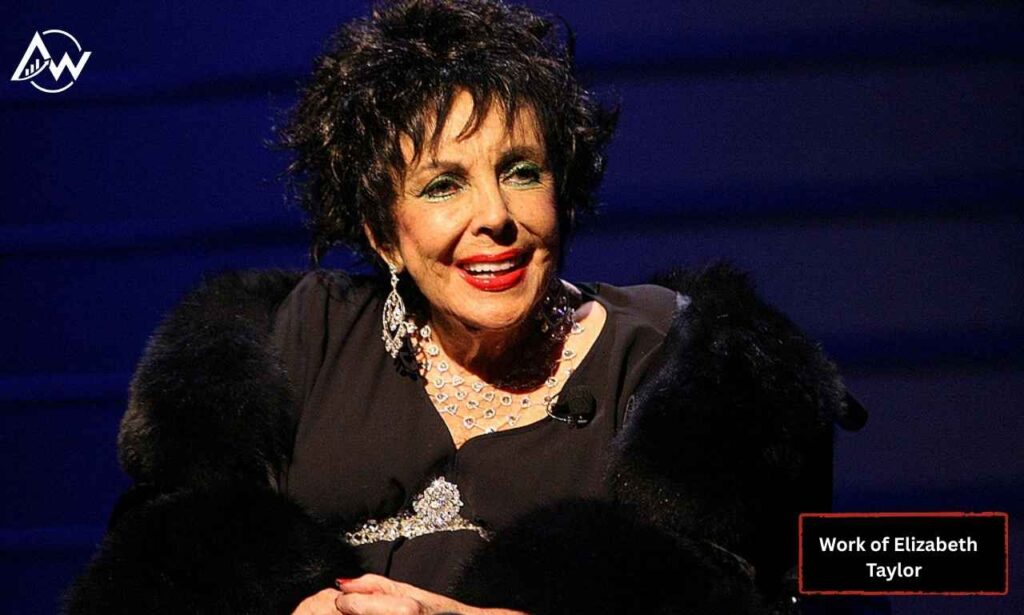
Elizabeth Taylor’s humanitarian legacy is inseparable from her response to the AIDS crisis in the 1980s. After the death of her close friend Rock Hudson from AIDS-related illness in 1985, she became one of the first major celebrities to publicly champion research and awareness around the disease.
That same year, she co-founded amfAR, the American Foundation for AIDS Research, at a time when public stigma made such advocacy genuinely risky for a star of her stature. She later established the Elizabeth Taylor AIDS Foundation in 1991, funding direct care and research initiatives.
Her advocacy went beyond fundraising:
- Testified before the U.S. Senate to push for increased AIDS research funding
- Publicly criticized government inaction on the epidemic, including remarks aimed directly at sitting presidents
- Used her celebrity platform at a time when few public figures were willing to associate with the cause
This work redefined her legacy, adding a layer of humanitarian influence that outlasted even her acting career.
Leadership Style of Karen Lynch in Corporate America
Lynch built a reputation as a data-driven executive who paired financial discipline with a genuine focus on patient outcomes. Colleagues and industry analysts frequently described her approach as pragmatic, favoring measurable results over abstract vision statements.
Her background growing up in a household shaped by financial hardship also informed a leadership style attentive to accessibility and health equity. She often emphasized expanding affordable care access as a business priority, not just a talking point.
A few traits defined her executive presence:
- Willingness to make large structural bets, such as the CVS-Aetna integration and healthcare acquisitions
- Direct communication style during high-pressure moments like the pandemic response
- A track record of steady promotion through operational roles rather than a single dramatic rise
This measured, execution-focused style stood in contrast to more charismatic corporate leadership archetypes, and it defined much of how she was perceived across the healthcare industry.
Public Persona and Cultural Impact of Elizabeth Taylor
Elizabeth Taylor’s public image extended far beyond her filmography. Her personal life, including eight marriages to seven different men (having married Richard Burton twice), kept her in tabloid headlines for decades and made her one of the most talked-about celebrities of the 20th century.
She also became a savvy businesswoman later in life, launching the perfume line White Diamonds, which became one of the best-selling celebrity fragrances of all time. Her jewelry collection, much of it gifted by Burton, later sold at auction for over $150 million.
Her cultural footprint included several distinct dimensions:
- Style icon known for her violet eyes and glamorous public appearances
- One of the first actors to build a genuine commercial brand outside of film
- A symbol of both classic Hollywood excess and later, humanitarian reinvention
Few entertainers of her era managed to remain culturally relevant across acting, business, and activism the way Taylor did.
Comparing the Career Trajectories of Lynch and Taylor
Placed side by side, Lynch and Taylor represent two entirely different blueprints for achieving influence. One climbed a corporate ladder built on operational expertise, while the other was thrust into fame as a child and had to build meaning around it over decades.
Despite the different arenas, both women reached the top of male-dominated fields and used their platforms for causes beyond their immediate careers, whether health equity or AIDS activism.
| Category | Karen Lynch | Elizabeth Taylor |
|---|---|---|
| Field | Corporate healthcare | Film and entertainment |
| Path to prominence | Steady executive promotion | Child stardom |
| Peak role | CEO, CVS Health | Oscar-winning actress |
| Signature achievement | Leading Fortune 500 healthcare integration | Two Best Actress Academy Awards |
| Beyond-career impact | Health equity initiatives | AIDS research advocacy |
| Public visibility | Business and financial media | Global entertainment press |
Their trajectories rarely overlap in substance, but both illustrate how women can define influence on their own terms, whether through boardroom strategy or cultural stardom.
Financial Milestones and Business Achievements
Karen Lynch’s financial milestones are tied directly to CVS Health’s scale as a Fortune 500 company. Under her leadership, CVS Health generated annual revenues exceeding $350 billion, placing it among the largest companies in the United States by revenue.
Her compensation as CEO also drew significant attention, regularly ranking among the highest for any female executive in corporate America. This reflected both the size of the company she led and the market’s valuation of her strategic decisions, including major acquisitions.
Elizabeth Taylor’s financial milestones took a very different shape, rooted in entertainment rather than corporate revenue:
- Reported $1 million salary for Cleopatra (1963), a record-breaking sum at the time
- White Diamonds perfume line generating hundreds of millions in sales over the years
- Jewelry collection auctioned posthumously for over $150 million in 2011
Both women, in their respective industries, became benchmarks for what financial success could look like at the top of their fields.
Challenges Overcome by Karen Lynch and Elizabeth Taylor
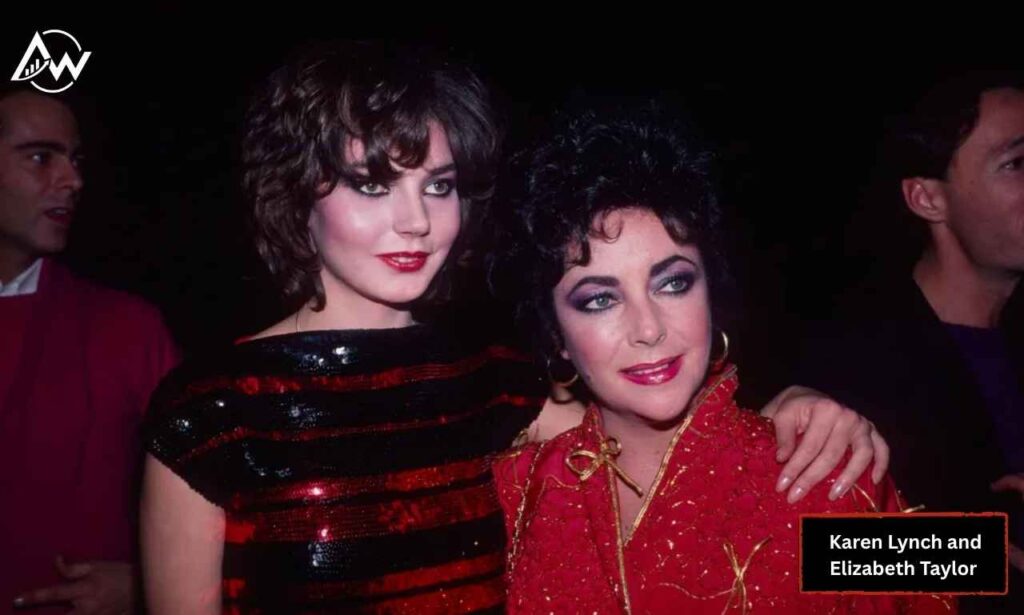
Karen Lynch’s path to the top wasn’t without early hardship. Losing her father young and growing up in a household stretched thin financially meant she built her career without the safety net many executives take for granted.
Later in her professional life, she faced the pressure of steering CVS Health through the pandemic, a historic pharmacy benefit crisis, and rising Medicare costs that ultimately contributed to her departure as CEO in 2024.
Elizabeth Taylor’s challenges were more public and personal:
- Struggled with chronic health issues, undergoing more than 20 major surgeries throughout her life
- Battled addiction to alcohol and prescription medication, seeking treatment at the Betty Ford Center
- Faced intense public scrutiny over her many marriages and personal choices, often at the cost of her privacy
Both women faced adversity that could have derailed their careers, yet each used those experiences to shape a more resilient public identity.
Awards, Honors, and Global Recognition
Karen Lynch’s recognition came largely through business and leadership rankings rather than formal awards. She appeared multiple times on Fortune’s Most Powerful Women list and was named to Time’s 100 Most Influential People in 2023.
Her presence on these lists reflected her standing not just within CVS Health, but across the broader healthcare and corporate leadership landscape in the United States.
Elizabeth Taylor’s recognition, by contrast, came through the entertainment industry’s highest honors:
- Academy Award for Best Actress, Butterfield 8 (1961)
- Academy Award for Best Actress, Who’s Afraid of Virginia Woolf? (1967)
- Honorary Academy Award (Jean Hersholt Humanitarian Award) for her AIDS activism in 1993
- Made a Dame Commander of the Order of the British Empire in 2000
Where Lynch’s honors reflected influence in the boardroom, Taylor’s spanned both her on-screen talent and her off-screen humanitarian contributions.
Modern Relevance of Karen Lynch in Contemporary Business
Even after stepping down as CEO, Karen Lynch remains a significant reference point in conversations about women in corporate leadership. Her tenure at CVS Health is frequently studied as a case of large-scale healthcare integration under pressure.
Business analysts continue to reference her strategic decisions, particularly the CVS-Aetna merger and the company’s push into primary care, as examples of how legacy retail companies attempt to transform into full healthcare providers.
Her broader relevance today includes:
- A frequently cited example in discussions about the small percentage of female Fortune 500 CEOs
- A case study for succession planning and leadership transitions at large public companies
- Continued visibility in healthcare policy conversations given her deep industry background
Her career remains a touchstone for how executives navigate massive organizational change in a rapidly shifting industry.
Eternal Legacy of Elizabeth Taylor in Cinema and Activism
Elizabeth Taylor’s legacy has only grown since her death in 2011. Her films remain staples of classic cinema retrospectives, and her performances are still studied as some of the finest dramatic work of her generation.
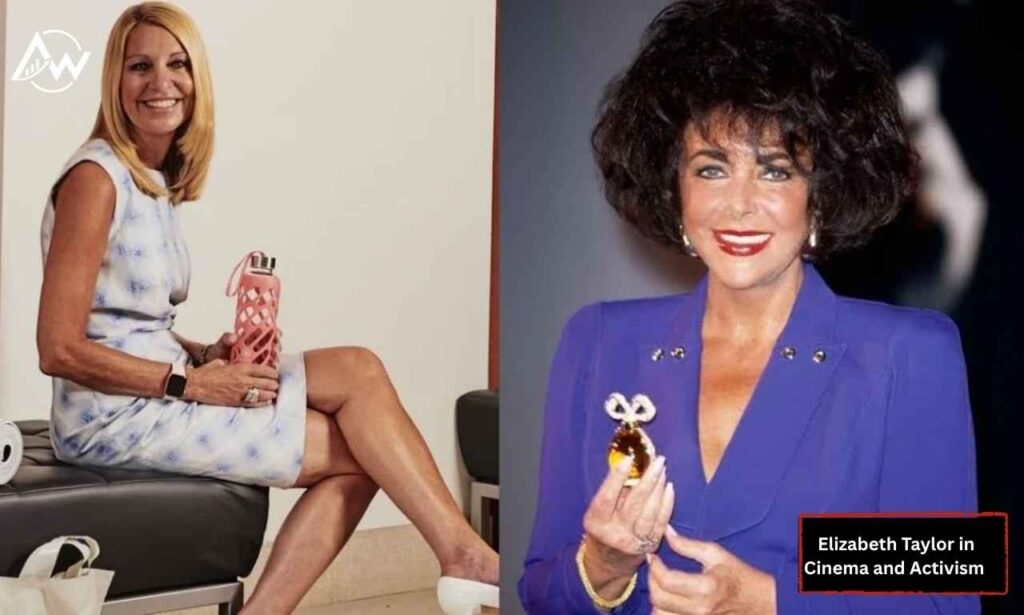
Beyond film, her AIDS activism reshaped how the public viewed the disease at a time when silence and stigma dominated the conversation. amfAR and the Elizabeth Taylor AIDS Foundation continue their work today, carrying her name and mission forward decades later.
Her enduring influence shows up in several ways:
- Continued academic and cultural interest in her film catalog and career arc
- Ongoing philanthropic work funded by the foundations she established
- Frequent references in fashion, beauty, and celebrity branding as a pioneer of the modern celebrity business model
Few figures from classic Hollywood have maintained this level of relevance across both entertainment and humanitarian circles.
Key Lessons from the Lives of Karen Lynch and Elizabeth Taylor
Despite their vastly different fields, Lynch and Taylor’s stories offer overlapping lessons about resilience and reinvention. Both faced early hardship, whether financial or health-related, and used it as fuel rather than letting it define their limits.
Both women also demonstrated that sustained influence requires more than initial success. Lynch had to keep adapting through mergers, a pandemic, and shifting healthcare policy, while Taylor had to reinvent her public identity multiple times across decades.
A few shared takeaways stand out:
- Long-term success often requires reinvention, not just a single breakthrough moment
- Using a public platform for causes beyond personal gain can define a legacy as much as career achievements
- Adversity, whether financial or personal, can become a foundation for later resilience rather than a permanent setback
Their differences make the comparison interesting, but these shared threads make it genuinely instructive.
Conclusion
Karen Lynch and Elizabeth Taylor never crossed paths, and no verified record suggests otherwise. What connects them in conversation is not a documented relationship, but the fact that both represent women who reached extraordinary heights in their respective industries.
Lynch’s story is one of steady corporate ascent, culminating in leading one of America’s largest healthcare companies. Taylor’s story is one of childhood stardom evolving into serious acting achievement and, later, meaningful humanitarian advocacy.
Understanding both figures on their own terms offers more value than searching for a connection that doesn’t exist. Their individual legacies, in business and in Hollywood, speak clearly enough without needing to be linked.
Frequently Asked Questions (FAQs)
Are Karen Lynch and Elizabeth Taylor related?
No. There is no documented family relationship between Karen Lynch and Elizabeth Taylor. They come from entirely different backgrounds and eras.
Did Karen Lynch and Elizabeth Taylor ever meet?
There is no public record or credible report indicating the two ever met. Their careers did not overlap in any documented professional or personal setting.
Why are Karen Lynch and Elizabeth Taylor mentioned together online?
The pairing typically comes from search engine clustering or general lists featuring influential women, not from any verified real-world connection between them.
What is Karen Lynch known for?
Karen Lynch is known for serving as President and CEO of CVS Health, where she led major initiatives including the company’s expansion into primary care and its pandemic response.
What is Elizabeth Taylor best known for?
Elizabeth Taylor is best known for her Academy Award-winning acting career, including films like Cleopatra and Who’s Afraid of Virginia Woolf?, as well as her pioneering AIDS activism.
Is Karen Lynch still CEO of CVS Health?
No. Karen Lynch stepped down as CEO of CVS Health in October 2024 and was succeeded by David Joyner.
What foundation did Elizabeth Taylor establish?
Elizabeth Taylor established the Elizabeth Taylor AIDS Foundation in 1991 and co-founded amfAR, the American Foundation for AIDS Research, in 1985.

AtlasWorth Editorial publishes well-researched content on celebrity net worth, biographies, entrepreneurs, and business leaders. Our articles are based on publicly available information from reliable sources and are regularly reviewed for accuracy and relevance.